
Where Every Step Finds Its Beat

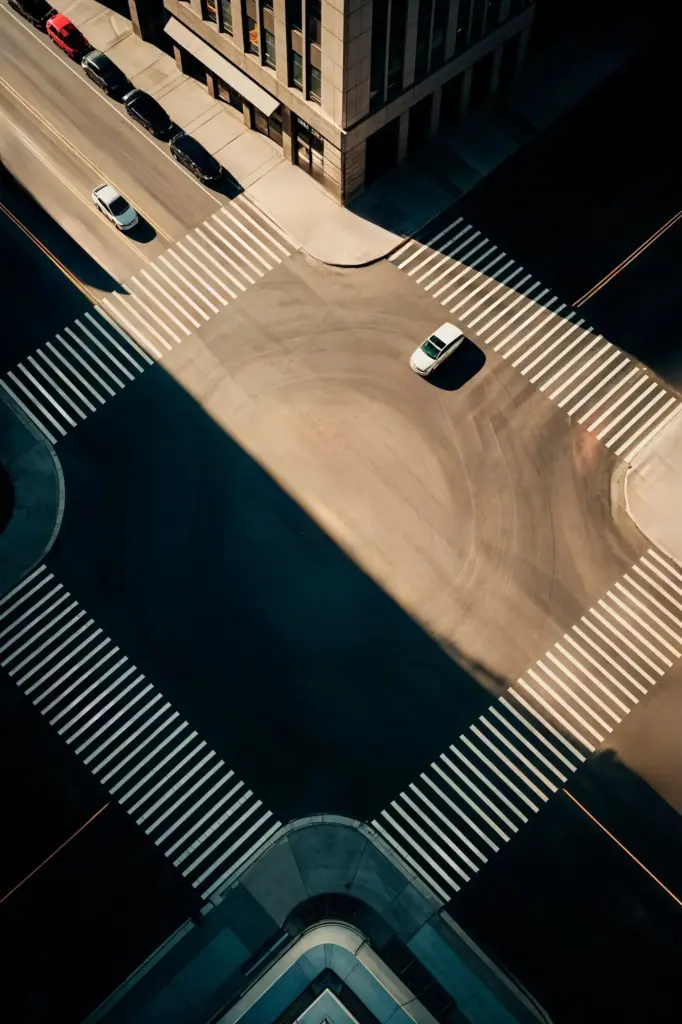
Today we explore Crosswalk Choreography: The Ballet of Pedestrian Flow, celebrating the elegance hidden in everyday crossings. Watch how timing, design, and human intuition synchronize like a practiced ensemble, shaping safer streets, kinder interactions, and a rhythm that respects each person’s journey from one curb to the other without losing momentum or dignity.

Conductors of the Crossing

A leading pedestrian interval grants people a few beats to step into the crosswalk before turning vehicles move, clarifying intent and restoring visibility. That small head start encourages drivers to register human presence sooner, reducing conflicts at the corner. Once you feel the difference, the crossing becomes less a gamble and more an assured, graceful entrance onto the street’s stage.
Scramble crossings halt vehicles in every direction while people move through the intersection like threads in a woven pattern, including diagonally. The effect is exhilarating and practical, minimizing turning conflicts and playful confusion. Stand at a famous plaza and feel the collective surge: thousands flowing, meeting, parting, and dispersing, as if a conductor lifted the baton and the city answered with synchronized footfalls.
High-visibility beacons and adaptive controllers read context and react, raising a clear call for drivers to yield and a confident cue for walkers to proceed. By balancing delay, speed, and fairness, these systems respect the human scale. The result resembles a responsive ensemble rehearsal where no instrument dominates, because every section understands its entry, duration, and respectful exit.

Steps, Gazes, and Unscripted Improvisations

People move with intuition honed by experience: micro-pauses, quick nods, sidesteps, and the quiet communication of a glance. Pedestrian flow forms lanes, especially in opposing directions, like murmuration without wings. We rely on subtle signals—hands, smiles, strollers, white canes—to renegotiate right-of-way in the moment, producing an empathy-driven rhythm that guides choices better than any horn or hurried shout could manage.

Eye contact, gestures, and courteous pauses

At the curb, a brief meeting of eyes establishes intent and often secures a safe yield. A raised palm, a gentle wave, or a small backward step reduces uncertainty. These gestures become civic choreography, grounded in empathy. They remind us that trust is built in milliseconds, and a predictable, polite cue can transform an intersection from stressful standoff to cooperative, unspoken agreement.

How crowds form lanes without talking
In dense flows, people naturally sort into directional streams, avoiding collisions through tiny course corrections. It feels choreographed, but no central command exists—only social awareness and space-sharing instincts. Researchers model this with forces and fields, yet the lived experience is more poetic: a moving tapestry that accommodates strollers, hurried commuters, and daydreamers without losing pace or fracturing into frustrating gridlock.

Stagecraft at the Curb

Design frames the performance before a single signal changes. Corners that project into the street shorten distances and sharpen sightlines; refuges create intermissions that lessen exposure. Materials matter, too: bold patterns, tactile textures, and modest elevation shifts cue behavior without shouting. When edges feel deliberate and welcoming, people step confidently, and the street responds like a well-prepared stage awaiting its cast.

Measuring the Applause

Success at a crosswalk is noticed in what does not happen: no screeching brakes, no panicked pivots, no near-misses dismissed as luck. Counting only collisions misses the near-miss symphony. Careful observation, video analytics, and community reports reveal patterns, pointing to fixes that save time without sacrificing safety. If applause is calm, continuous motion, measurement helps the city keep time faithfully.

Vision Zero as the score we refuse to improvise
The safe system approach centers human life above convenience, designing streets that forgive inevitable mistakes. By managing speed, separating conflicts, and prioritizing visibility, it treats harm as unacceptable rather than unfortunate. This philosophy reframes decisions at every level, turning budget lines and signal timings into ethical choices that honor dignity while maintaining a steady, comprehensible rhythm for daily travel.

Cameras that count near-misses, not just crashes

Modern tools study trajectories and braking cues to find invisible risk before tragedy arrives. Heat maps of evasive maneuvers reveal corners where timing, geometry, or sightlines falter. By addressing these hotspots with small, intelligent tweaks, cities reduce danger without waiting for painful data. Prevention becomes practical, and the choreography grows smoother through careful, proactive tuning instead of reactive regret.

Scenes from the Crosswalk

Stories help numbers breathe. Think of a buzzing plaza where a diagonal wave carries students, nurses, baristas, and buskers across in a joyous sweep. Consider a quiet neighborhood morning, a stroller rolling, a dog pausing, a neighbor nodding. In both extremes, choreography emerges—sometimes flashy, sometimes humble—always reminding us that movement is community, and every safe arrival is shared achievement.

Shibuya’s diagonal thunder as a living lesson

Watching crowds surge across multiple directions feels like witnessing a city inhale and exhale. Despite the energy, conflict is rare because rules are clear and signals decisive. The spectacle reframes walking as celebration, not obligation. Visitors carry home a memory that influences their expectations back where they live, strengthening the case for generous timing and unmistakable markings in their own neighborhoods.

Bogotá’s mimes and the power of playful guidance

Public performance once nudged drivers and walkers toward courteous behavior through humor and surprise. Laughter disarmed defensiveness, and habits shifted simply because attention was captured. The lesson endures: culture and design can partner, using delight to amplify safety. A smile, a gesture, a cleverly painted corner—together they coach better choices without lectures, tickets, or sterile command-and-control.
Join the Ensemble

Better crossings arrive faster when neighbors participate like dedicated cast members. Observe a corner at rush, noon, and dusk. Collect tiny frustrations and small victories. Share them with your city and pilot quick improvements. From cones and paint to signal tweaks and curb realignments, lightweight experiments can reveal lasting solutions, proving that safety and grace belong on every block, not only downtown.

Audit your corner like a choreographer

Stand back and watch entrances, exits, and hesitations. Time the walk phase, count turning vehicles, photograph blocked sightlines, and note puddles or ice. Invite elders, teens, and parents to weigh in. This living score reveals what the corner needs—perhaps a head start, brighter stripes, a refuge island—so the next rehearsal feels confident rather than improvised under pressure.

Adaptive waves and respectful privacy

Sensors and computer vision can tune signals to actual demand while protecting identities through on-device processing, limited retention, and tight safeguards. Data can be precise without being invasive. When technology listens for patterns instead of personal details, it earns trust, inviting a future where crossings adapt gently to lull or surge and keep people moving safely without anxiety.
Valinoraxita
Privacy Overview

This website uses cookies so that we can provide you with the best user experience possible. Cookie information is stored in your browser and performs functions such as recognising you when you return to our website and helping our team to understand which sections of the website you find most interesting and useful.